
Control panels
VFD Control Panels Built to Order for Pumps, Fans and Conveyors
EKA CNC builds VFD control panels, including VFD motor control panels and remote control panels, for pumps, fans, compressors, conveyors and machines. Send the motor ratings, supply and control requirements, and we will prepare a panel proposal and quote.
- Built to your motor list
- Remote and local control
- Up to IP65 enclosures
- Pan-India supply
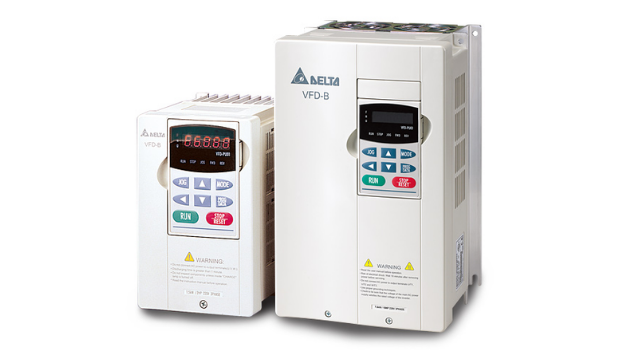
VFD Control Panels Built to Your Application
EKA CNC builds and supplies VFD (variable frequency drive) control panels and industrial VFD automation panels in India, including VFD remote control panels and VFD motor control panels.
What Is a VFD Panel?
A VFD panel (variable frequency drive panel), also known as a VFD control panel, is designed to control the speed of an electric motor, such as a pump, fan or feed motor. VFD panels are widely used in drilling, pumping and other large machine applications such as conveyors and compressors.
AC motor speed is controlled in two ways – either by controlling the voltage or frequency. Frequency control, with voltage adjusted in proportion, gives better control than voltage control alone because it keeps the motor flux nearly constant. This is where the working of VFDs comes to play. A VFD is a power conversion device that converts fixed-voltage, fixed-frequency input power into a variable-voltage, variable-frequency output to control AC induction motors.
Most of the industrial applications require variable speeds at peak load conditions and constant speeds at normal operating conditions. In closed-loop operation, a VFD maintains the speed of the motor at a constant level, even in case of input and load disturbances.
Why Use a VFD Panel?
The two main features of VFD are adjustable speeds and soft start/stop capabilities. These two features make VFDs effective controllers for AC motors.
Benefits of a VFD Panel
Variable frequency drives not only offer adjustable speeds for accurate and precise control applications, but also have more benefits in terms of process control and conservation of energy. Some of these are given below.
Energy Saving
Electric motors use a large share of industrial electricity, often estimated at around two-thirds. Reducing motor speed by varying voltage and frequency together uses much less power than running at full speed and throttling the flow, so VFDs can save significant energy, especially on fans and pumps.
Closed Loop Controlling
VFD allows accurate positioning of the motor speed by continuously comparing with reference speed even at changes in the loading conditions and input disturbances like voltage fluctuations.
Limits Starting Current
An induction motor started direct-on-line draws 6 to 8 times its rated current. Compared with conventional starters, a VFD gives better results because it delivers low frequency at the time of starting. Due to low frequency, the motor draws less current and this current never exceeds its nominal rating at starting as well as operating.
Smooth Operation
It offers smooth operations at starting and stopping and also reduces thermal and mechanical stress on motors and belt drives.
High Power Factor
Because the motor's reactive current is supplied from the VFD's DC link, the supply sees a high displacement power factor, which reduces the need for separate power factor correction. The power factor for the induction motor is very low for particularly no-load application, while at full load, it is 0.88 to 0.9. Low power factor results in poor utilization of power due to high reactive losses.
Easy Installation and Related Panel Types
- Pre-programmed, factory-wired VFD panels make connection and maintenance easy.
- Distributed Control Systems
VFD Panel Technical Specifications
We offer VFD Panels conforming to the following specifications:
| System | 3 Phase, 3 or 4 wire, 50Hz |
| Rated Current | Up to 5000 Amps |
| Operational Voltage | 230/380/415/440 V AC |
| Rated Insulation | 1000v |
| Rated Service Voltage | 690v |
| Ambient Temperature | 45 °C |
| Degree of Protection | IP42-IP65 |
| Form of Separation | Up to 3B/4B |
| Bus Bar System | Interleaved above 3200A |
| Bus Bar | Aluminium or Copper |
| Feeder Configuration | Semi draw-out or fixed type |
Your next step
Get price & availability
Share the model or part number and quantity. Attach a nameplate photo or BOM on the quote form if you have one.
Buyer guide
What Goes Inside a VFD Panel
A VFD panel is more than a drive in a box. A typical panel includes:
- Incoming isolation and protection: an isolator or MCCB, with fuses or a breaker selected to protect the drive's input.
- Line reactor or DC choke: reduces harmonic current and protects the drive from supply disturbances.
- EMC filter: limits electrical noise conducted back to the supply, where required.
- The VFD: sized on the motor's full-load current and the duty, normal or heavy.
- Output reactor or dV/dt filter: protects motor insulation when motor cables are long.
- Bypass contactor: optional, to run the motor direct-on-line if the drive is out of service.
- Braking resistor: for high-inertia loads or fast stops.
- Cooling: fans and filters sized for the heat the drive gives off.
- Controls: local and remote selector, start and stop push-buttons, speed potentiometer, indicating lamps, meters, and where needed a PLC or HMI.
Design Points to Agree Before the Panel Is Built
- Motor list: kW, full-load current, voltage and the load type for every motor.
- Supply and fault level: voltage, frequency and prospective short-circuit current at the panel.
- Control: local, remote or both; analogue, digital or network signals from a PLC, SCADA or BMS.
- Environment: indoor or outdoor, ambient temperature, dust and humidity, which decide the IP rating and the cooling method.
- Motor cable length: long runs may need output filtering.
- Harmonics: whether your site or utility sets limits that require reactors or filters.
- Standby: whether a bypass or a standby drive is needed for critical pumps.
- Documents and checks: general arrangement and wiring drawings for approval, and an inspection before dispatch.
Agreeing these points at the start avoids changes during manufacture and makes commissioning faster.
Faster quotations
What to Include in Your Enquiry
Send what you have. If a detail is unknown, say so and we will help identify it from a photo or the machine documentation.
- Motor list with kW, current and voltage
- Application and load type for each motor
- Supply voltage and available fault level
- Control method: local, remote, PLC or SCADA
- Installation location, ambient and IP rating
- Preferred VFD brand, if any
Buyer questions
Frequently Asked Questions
What is the difference between a VFD and a VFD panel?
A VFD is the drive unit that varies motor speed. A VFD panel is a complete enclosure with the drive, incoming protection, reactors or filters, cooling, controls and wiring, ready for connection to the supply and motor. A panel protects the drive from dust and moisture and gives operators simple controls.
Can one panel control several motors?
Yes. A panel can house several drives, one per motor, with shared incoming protection and controls. One drive can also run several small motors together in some applications, but each motor then needs its own overload protection. Send your motor list and we will propose the arrangement.
Which VFD brands do you use in panels?
We supply drives from brands including Delta, Fuji, CG Emotron and Crompton Greaves, and can build panels around your preferred brand where it is available. Matching the brand already used on your site makes spares and maintenance simpler. See our VFD drives page.
Can the panel be controlled from a PLC or SCADA system?
Yes. VFD panels can accept start, stop and speed signals as hard-wired digital and analogue signals or through a communication network such as Modbus, depending on the drive. Remote control panels can also be supplied for operation away from the main panel. Tell us your control system when you enquire.
Do I need a bypass in my VFD panel?
A bypass lets the motor run direct-on-line at full speed if the drive fails or is under maintenance. It is useful for critical pumps and fans where stopping is not acceptable. It adds cost and requires interlocking, so include it only where continuity of operation justifies it.
How do I keep a VFD panel running reliably?
Keep panel filters and fans clean, check that the panel is not running hot, tighten power terminals during shutdowns, and keep a copy of all drive parameters. Do not leave panel doors open in dusty areas. Cooling fans and capacitors in drives age with heat and may need replacement on older panels.
What IP rating do I need?
Indoor panels in clean electrical rooms often use IP42 or IP54. Dusty or wet areas, and outdoor locations, need higher ratings up to IP65, with suitable cooling such as filtered fans, heat exchangers or panel air conditioners. Tell us the location and ambient conditions so we can propose the right enclosure.
How do I get a quote for a VFD panel?
Send the motor list, supply details, control requirements and location through the quote request form, by email to contact@ekacnc.com or by phone. We will review the requirement, ask any questions and send a proposal with the panel scope and price.
Keep exploring
Related Products and Services
From requirement to quotation
Have a part number or a machine down?
Send the model, nameplate photo or a short description. We check availability, compatible alternatives and lead time, then reply with a quotation.