
Sensors
Industrial Sensors for Detection, Mark Reading and Distance
Photoelectric, inductive proximity, ultrasonic, fibre optic and laser sensors, plus colour mark, label, fork and PET bottle detection sensors for packing and machine lines. Send the sensor model or your application for price and availability.
- Photoelectric and inductive
- Mark, label and fork
- Laser and ultrasonic
- Pan-India shipping

Industrial Sensors from Chennai
EKA CNC supplies industrial sensors from Chennai. Industrial sensors detect events or changes in a machine or process and give a corresponding output signal. These sensors can sense physical input such as gas, image, humidity, position, pressure, force, level, flow, motion, and temperature. They respond by producing an output on a display or show the information in electronic form for further processing. This page covers photoelectric and reflective sensors, colour, print and eye mark sensors, label and fork sensors, PET bottle detection sensors, inductive proximity sensors, ultrasonic, fibre optic and laser sensors, and distance measurement sensors.
Industrial Sensor Models

Your next step
Get price & availability
Share the model or part number and quantity. Attach a nameplate photo or BOM on the quote form if you have one.
In this range
Industrial Sensors Available from EKA CNC
Open a product for its specifications, or add several to one RFQ and send them together.

Colour Mark Sensor
Specifications Surface Treatment Color Coated Reaction Time 0.5ms Scanning Range 700-1000 mm Power Supply DC 10-30 V

Distance Measurement Sensor
Specifications Coated Color Coated Material Aluminium Packaging Type Box Current Output 4-20mA

Eye Mark Sensor
Specifications Voltage DC 10-30 V Connector Cable 2-4 m Working Temperature -25 Degree C ~ +70 Degree C Frequency 40-50 Hz

Fibre Optic Sensor
The offered sensor used in various devices and equipments for sensing purposes.

Fork Sensor
Specifications Material Aluminium IP Rating IP 65 DC Voltage 18-24 V Operating Temperature Range -20 Degree C to +70 Degree C

Inductive Sensor
Specifications Material Stainless Steel Supply Voltage DC 10-30 V IP Rating IP67 Operating Temperature Range -25~70 Degree C

Label Sensor
This sensor is installed in various machines and devices for sensing applications.

Label Sensor for Label Detection
Besides, this sensor can be purchased from us nominal rates.

Laser Sensors
Specifications Maximum Current Consumption 35mA Maximum Operation Distance 16-50 m Sensing Range 0 to 50m Response Time 333 mu s IP Protection IP67

Metal Cylindrical Inductive Sensor
The provided sensor finds wide application in transformers, remote, AC, etc.

PET Bottle Detection Sensor
It is designed by latest tools using best quality material by adroit professionals in compliance to set market…
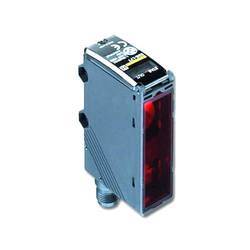
Photoelectric Sensor
Specifications Frequency 50 Hz Voltage 220-240 V Sensing Distance 10-40 cm DC Voltage 10~30 V


Rectangular Inductive Proximity Sensor
Being a reckoned name in this domain, we are involved in offering supreme quality range of Rectangular Inductive…

Reflective Photoelectric Sensor
Specifications IP Rating IP65 Response Frequency 25-40 Hz Working Voltage AC 90-250V DC Voltage 10-48 V

Ultrasonic Sensors
Specifications Brand Leuze Sensing Distance 3mm Frequency 24-40 Hz No of Pin 4 DC Voltage 12-20 V Power Source Electric
Buyer guide
Which Sensor Suits Your Application?
| Sensor type | Detects | Good for |
|---|---|---|
| Inductive proximity | Metal targets at short range | Machine positions, cams, gear teeth, cylinder ends |
| Photoelectric (through-beam, retro-reflective, diffuse) | Almost any object, at longer range | Conveyors, part presence, counting |
| Colour, print or eye mark | Contrast or colour of a printed mark | Registration on packing film and wrappers |
| Label and fork sensors | Gap between labels on a backing web | Labelling machines |
| Ultrasonic | Objects by sound echo | Transparent bottles, liquids, dusty areas |
| Fibre optic | Small objects in tight spaces | Small parts, hot or confined spots |
| Laser and distance | Precise position or distance | Measurement, small or distant targets |
Checks Before Replacing a Sensor
- Output type: NPN or PNP transistor, relay, or analogue. A PNP sensor will not work on an input card wired for NPN without changes.
- Normally open or normally closed: must match the existing logic.
- Supply voltage: most are 10–30 V DC; check for AC types.
- Sensing range and housing: M8, M12, M18, M30 or rectangular body, and the mounting space.
- Connection: fixed cable or M8/M12 connector.
- Flush or non-flush (inductive): flush types can be mounted level with metal; non-flush types sense further but need clear space around the face.
Many sensor faults are actually dirty lenses, misaligned reflectors, loose brackets or damaged cables, so check these before ordering a new sensor.
Faster quotations
What to Include in Your Enquiry
Send what you have. If a detail is unknown, say so and we will help identify it from a photo or the machine documentation.
- Sensor brand and model number from the body or cable
- Sensor type and sensing range
- Output: NPN, PNP, relay or analogue; NO or NC
- Supply voltage and connection (cable or M8/M12)
- What you need to detect (material, colour, size, speed)
- Quantity and delivery location
Buyer questions
Frequently Asked Questions
What is the difference between NPN and PNP sensors?
Both are DC transistor outputs. A PNP sensor switches the positive supply to the load and is common with most PLCs in India and Europe. An NPN sensor switches the load to 0 V and is common with Japanese-style input cards. The replacement must match the existing output type, or the PLC input wiring must be changed.
Which sensor should I use to detect transparent PET bottles?
Clear bottles are hard for ordinary diffuse photoelectric sensors. Use a sensor designed for transparent objects, such as a retro-reflective sensor with a polarising filter tuned for clear materials, or an ultrasonic sensor that detects by sound rather than light. This page includes a PET bottle detection sensor; send your bottle size and line speed to confirm the right model.
How does a colour mark or eye mark sensor work?
It shines light onto the printed web and reads the contrast or colour between the mark and the background. When the mark passes, the output switches, and the packing machine uses that signal to cut or seal in register. Settings are taught on the sensor. Fast lines need a sensor with a short response time.
What is a fork sensor used for?
A fork sensor has the emitter and receiver in one U-shaped housing, so no alignment is needed. It is used to detect labels on a backing web, small parts and edges passing through the slot. Ultrasonic or capacitive fork sensors can also detect clear labels that optical sensors miss.
Can you supply a replacement for a sensor from another brand?
Usually yes, if we know the type, sensing range, output, supply voltage, housing size and connection. Send the old sensor's model and a photo. We will suggest an equivalent from the range we supply or try to source the original through our find a part service.
Why does my photoelectric sensor switch falsely?
Common causes are a dirty lens or reflector, a shiny background reflecting light back, strong ambient light, vibration moving the bracket, or a sensitivity setting that is too high. Clean the optics, re-align the sensor, reduce sensitivity and, for shiny targets, consider a polarised retro-reflective or background-suppression sensor.
How do I get a quote?
Send the sensor model numbers or your application details with quantities through our request a quote form, by email to contact@ekacnc.com or by phone. If the label is worn, send a photo of the sensor and its connector. We will reply with the matching model, price and availability.
From requirement to quotation
Have a part number or a machine down?
Send the model, nameplate photo or a short description. We check availability, compatible alternatives and lead time, then reply with a quotation.