
Encoders & feedback
Incremental Encoders: Solid Shaft, Hollow Shaft and Programmable
Incremental encoders for speed and position feedback, including high resolution Serie 10 and 58 models, programmable PR90 encoders, 100/DUO models, sin/cos output and stainless IP67 versions. Send the encoder code or PPR and output type for a quote.
- Solid and hollow shaft
- Programmable PPR models
- Sin/cos and stainless options
- Pan-India shipping
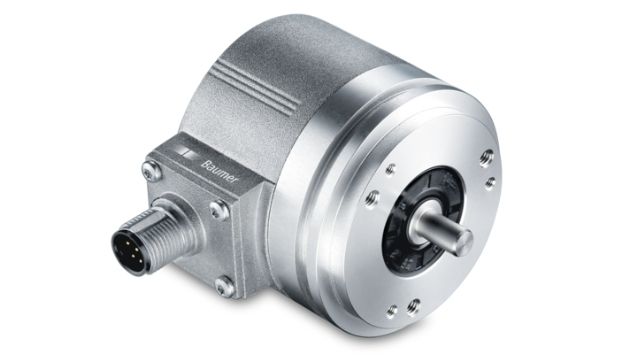
Incremental Encoders from Chennai
EKA CNC supplies incremental encoders from Chennai, India. The range includes Serie 10 and 10K high resolution solid shaft encoders, PR90 and PR90H programmable encoders, 100/DUO and 100H/DUO encoders, Serie 58 high resolution and sin/cos encoders, and stainless steel IP67 and compact blind hollow shaft models.
Your next step
Get price & availability
Share the model or part number and quantity. Attach a nameplate photo or BOM on the quote form if you have one.
In this range
Incremental Encoders: Solid Shaft, Hollow Shaft and Programmable Available from EKA CNC
Open a product for its specifications, or add several to one RFQ and send them together.

Serie 10 High Resolution Incremental Solid Shaft Encoder
Specifications Pulse 50.000 pulses External Diameter 58 mm Shaft 58 mm Protection IP67 according to DIN EN 60529 Maximum number of revolutions permitted mechanically…

Serie 100/DUO Incremental Encoder
Specifications Resolution Up to 5.000 pulses per turn External Diameter 100 mm Shaft 11 mm Integrated bearing insulation 2,5 kV Protection IP66 according to…

Serie 100H/DUO Incremental Encoder
Specifications Resolution Up to 5.000 pulses per turn External Diameter 100 mm Blind Hollow Shaft 16 mm Integrated Bearing Insulation 2.5 kV Protection IP66…

Serie 10K High Resolution Incremental Solid Shaft Encoder
Specifications Resolution Up to 5.000 pulses per turn Product Weight 0,7 Kg External Diameter 58 mm Shaft 10 mm Protection Class IP69K according to…

Serie 50HI INOX Compact Incremental Blind Hollow Shaft Encoder
Specifications Resolution Up to 5000 pulses per turn Product Weight 0,5 Kg Compact Dimensions 55 x 36 mm Blind Hollow Shaft 6 mm Protection…

Serie 58 High Resolution Incremental Solid Shaft Encoder
Specifications Resolution Up to 50.000 pulses per turn Product Weight 0,5 Kg External Diameter 58 mm Shaft 6 mm Protection Class IP67 according to…

Serie 58 Sin/Cos Incremental Solid Shaft Encoder
Solid shaft encoders lie sin cos encoder supplied by EKA CNC, Chennai.

Serie PR90 Programmable Incremental Solid Shaft Encoder
Specifications Bearings Ballraces Cover Aluminium Shaft SS Maximum number of revolutions permitted mechanically 6000 rpm Protection IP65 Maximum load permitted on axial shaft 40…

Serie PR90H Programmable Incremental Hollow Shaft Encoder
Specifications Programmable incremental encoder 65.536 pulses External Diameter 58 mm Hollow shaft 15 mm Protection IP65 according to DIN EN 60529 Maximum number of…

Serie10 IP67 INOX High Resolution Incremental Solid Shaft Encoder
Specifications Resolution up to 50.000 pulses per turn External Diameter 58 mm Shaft 10 mm Protection Class IP67 according to DIN EN 60529 Rotor…
Buyer guide
How an Incremental Encoder Works
An incremental encoder gives a train of pulses as its shaft turns. Two channels, A and B, are offset by 90 electrical degrees, so the controller can count position and tell the direction of rotation. Many encoders add a once-per-turn index or zero pulse (Z) used for homing. Resolution is given in pulses per revolution (PPR).
Because the encoder only reports movement, the controller must find a reference after power-on, usually with a home switch and the Z pulse. Electrical noise can add or lose counts, so good cabling and shielding matter. Where the position must be known immediately at power-on, use a singleturn or multiturn absolute encoder instead.
Sin/cos encoders output analogue sine and cosine signals instead of square pulses. Drives interpolate these signals to get very fine resolution, which is useful for smooth low-speed servo control.
Matching a Replacement Encoder
| Check | Why it matters |
|---|---|
| PPR | Must match the drive or counter setting, or position and speed scaling will be wrong |
| Output circuit | Line driver (RS-422/TTL), push-pull (HTL) or open collector must suit the input card |
| Supply voltage | 5 V and 10–30 V encoders are not interchangeable |
| Channels | A, B, Z and their inverted signals, as wired on the old encoder |
| Shaft and flange | Shaft diameter, solid or hollow shaft, flange type and bolt pattern |
| Connection | Cable length or connector type and pin-out |
| Protection | IP rating; stainless housing for washdown or corrosive areas |
Programmable encoders such as the PR90 series let you set the resolution and output to match the old unit, which helps when the exact code is no longer available.
Faster quotations
What to Include in Your Enquiry
Send what you have. If a detail is unknown, say so and we will help identify it from a photo or the machine documentation.
- Encoder brand and full code from the label
- Pulses per revolution (PPR)
- Output type and supply voltage
- Shaft type, shaft diameter and flange
- Cable or connector type and length
- Quantity and delivery location
Buyer questions
Frequently Asked Questions
What is the difference between incremental and absolute encoders?
An incremental encoder outputs pulses as the shaft moves, so the controller counts them to track position and needs a reference after power-on. An absolute encoder outputs a unique position value at every angle and knows its position immediately at power-on. Incremental encoders are simpler and cost less; absolute encoders avoid homing.
What does a programmable incremental encoder offer?
A programmable encoder, such as the PR90 or PR90H series on this page, lets you set the pulses per revolution and often the output settings yourself. One model can replace several fixed-resolution encoders, which is useful for maintenance stock and when the original encoder code is not available.
Which output type do I need: line driver, push-pull or open collector?
Match the input card or drive. Line driver (RS-422, often 5 V TTL) uses differential signals and resists noise over longer cables. Push-pull (HTL, usually 10–30 V) suits PLC high-speed counters. Open collector needs a pull-up resistor at the receiving side. When replacing, copy the original encoder's output type and supply voltage.
When should I use a stainless steel or IP67 encoder?
Choose a stainless steel housing, such as the Serie10 IP67 INOX or 50HI INOX models, where the encoder is exposed to washdown, coolant, food processing or corrosive atmospheres. IP67 sealing protects against dust and temporary immersion. For normal machine interiors a standard aluminium housing is usually enough.
Why is my encoder counting wrongly?
Common causes are electrical noise from unshielded or poorly earthed cables, cables run next to motor power leads, a slipping coupling, a worn encoder bearing, or a PPR setting in the drive that does not match the encoder. Check the coupling and cable first. If the signals are erratic with a good cable, the encoder may need replacing.
Can you supply an encoder for my servo motor or machine?
Send the existing encoder's label and photos. If it is a standard industrial encoder we will match it from this range or the rotary encoder range. Encoders built into servo motors often use proprietary protocols, so we will check sourcing through our find a part service.
How do I get a quote?
Send the encoder code, or the PPR, output, supply voltage and shaft details, with quantities through our request a quote form, by email to contact@ekacnc.com or by phone. We will reply with the matching model, price and availability.
From requirement to quotation
Have a part number or a machine down?
Send the model, nameplate photo or a short description. We check availability, compatible alternatives and lead time, then reply with a quotation.