
Encoders and feedback
Hengstler Absolute Encoders for Accurate Position Feedback
EKA CNC supplies Hengstler absolute encoders that report shaft position at power-up, for machine tools, robotics and conveyors. Send the type code from the label, or the interface and shaft details, for price and availability.
- Single and multi-turn
- Matched by type code
- Tested before dispatch
- Pan-India shipping
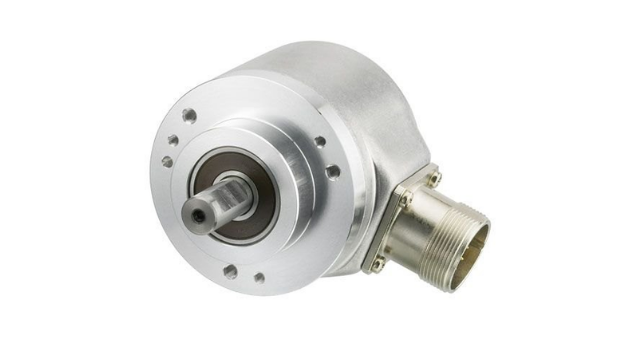
Hengstler Absolute Encoders for Position Feedback
EKA CNC supplies Hengstler products from Chennai. We can source Hengstler absolute encoders, digital timers and counters, and safety relays at competitive prices. Our range includes Hengstler absolute encoders. One model in the range is an optical absolute encoder with a multi-turn gearbox and optical scanning, size 36 mm. It is fitted with a solid shaft and physically compatible with standard incremental encoders. Hengstler absolute encoders are designed for easy operation and dependable function. The platform-based concept enables particularly compact construction and modular internal components. Hengstler Absolute Encoders are used in many different industrial applications for speed feedback and accurate position measurement. Multi-turn Hengstler Absolute Encoders are used in conveyor technology, robotics and other applications that need precise control of rotary motion.
EKA CNC is an independent reseller of Hengstler products, not an authorised dealer or distributor. Brand names are trademarks of their owners.
Your next step
Get price & availability
Share the model or part number and quantity. Attach a nameplate photo or BOM on the quote form if you have one.
In this range
Hengstler Absolute Encoders Available from EKA CNC
Open a product for its specifications, or add several to one RFQ and send them together.

Hengstler Absolute Encoder
Details: • Single-turn and multi-turn absolute encoders • Broad temperature range: -40 to +100°C • Resolution: up to 34…
Buyer guide
Single-Turn vs Multi-Turn Absolute Encoders
An absolute encoder gives a unique code for every shaft position, so the controller knows the position as soon as power is applied. An incremental encoder only counts pulses from a reference point and must be homed after power-up.
- Single-turn: gives a unique position within one revolution. After one full turn, the code repeats. This suits applications where the shaft moves less than one turn, or where the count of turns is not needed.
- Multi-turn: also counts the number of complete revolutions, using a gear train or an electronic counter. This suits ball screws, cranes, conveyors and robot axes that turn many times across their travel.
Resolution is usually stated in bits: the single-turn resolution (steps per revolution) and, for multi-turn encoders, the number of revolutions counted. Both figures must match the controller's settings when you replace an encoder. Our single-turn and multi-turn absolute encoder pages cover each type in more detail.
Specifying a Replacement Absolute Encoder
The full type code on the label identifies the exact variant. If it cannot be read, send these details:
- Interface: for example SSI, BiSS, CANopen, Profibus, Profinet or EtherCAT. The encoder must use the same interface as the controller.
- Resolution: single-turn bits and number of turns.
- Code type: Gray or binary, for SSI encoders.
- Shaft and flange: solid or hollow, diameter, and flange type.
- Supply voltage and connection: cable or connector, and its orientation.
After fitting a new absolute encoder, the zero or reference position usually needs to be set again in the encoder or the controller, because the new encoder will report a different raw value at the same mechanical position. Plan this step before removing the old unit.
Faster quotations
What to Include in Your Enquiry
Send what you have. If a detail is unknown, say so and we will help identify it from a photo or the machine documentation.
- Full type code from the encoder label
- Interface: SSI, CANopen, Profibus or other
- Single-turn or multi-turn, and resolution
- Shaft type, diameter and flange
- Controller or machine make
- Quantity and delivery location
Buyer questions
Frequently Asked Questions
Why choose an absolute encoder instead of an incremental one?
An absolute encoder reports the true shaft position as soon as power is applied, so the machine does not need a homing run after a power cut. This is useful on large axes, cranes, robots and conveyors where homing is slow or unsafe. Incremental encoders are simpler and cheaper where homing at start-up is acceptable.
Is a Hengstler absolute encoder a direct fit for an incremental encoder?
Mechanically it may be. Some Hengstler absolute encoders use a solid shaft and flange compatible with standard incremental encoders. Electrically they differ, because absolute encoders use a data interface such as SSI or a fieldbus, so the controller input must support that interface. Check this before changing encoder type.
Which interface does my encoder use?
The interface is part of the type code on the label, and it is often clear from the connector and cable. Fieldbus encoders such as CANopen or Profibus usually have bus-in and bus-out connectors or address switches. Send a photo of the label and connectors and we will identify it.
Do I need to set the zero after replacing an absolute encoder?
Usually, yes. The new encoder reports a different raw value at the same mechanical position, so the reference or offset must be set again in the encoder or the controller. Many encoders have a preset function for this. Mark the machine position before removing the old encoder.
Can you supply Hengstler counters and safety relays as well?
We can source Hengstler digital timers, counters and safety relays along with encoders. These are not all listed in the online catalogue, so send the model number from the existing unit or the function you need, and we will confirm availability, price and any suitable equivalent.
How do I protect an absolute encoder in service?
Use a flexible coupling or a correctly fitted torque arm so the bearings do not take side loads, keep cables away from motor power cables, earth the shield as the manual specifies, and choose an IP rating that suits dust and coolant in the area. Avoid hammering couplings onto the shaft.
How do I get a quote?
Send the type code, a label photo, the quantity and the delivery location through the quote request form, email contact@ekacnc.com or call us. We will confirm price and availability, or suggest an equivalent if the exact variant is not available.
From requirement to quotation
Have a part number or a machine down?
Send the model, nameplate photo or a short description. We check availability, compatible alternatives and lead time, then reply with a quotation.