
Servo motors
Function of a Servo Motor and Its Importance in CNC Machines
A servo motor moves a CNC axis to an exact position using closed-loop feedback. This guide covers how it works, common faults, and what to send EKA CNC to quote a replacement motor or drive.

A servo motor is a rotary or linear actuator designed to provide precise control of angular or linear position, velocity, and acceleration. It is typically used in closed-loop systems where feedback from the motor’s motion is used to achieve highly accurate movement. Servo motors are commonly used in industries like robotics, CNC machinery, automation, and more.
How a Servo Motor Works
- Precise Positioning: Servo motors are known for their ability to move to an exact position. They receive commands from a controller and use feedback mechanisms (such as encoders) to monitor their actual position, making corrections as necessary to achieve the desired position.
- Speed Control: A servo motor can accurately control the speed of rotation or movement. The feedback system allows it to adjust its speed to match the required rate, whether accelerating, maintaining constant speed, or decelerating.
- Torque Control: Servo motors are capable of providing specific amounts of torque based on the requirements of the application. This makes them ideal for situations where maintaining a controlled amount of force is necessary, such as in robotic arms or CNC machines.
- Closed-Loop Feedback: Servo motors work in a closed-loop system, where sensors (like encoders) provide continuous feedback on the motor’s position and speed. This allows for highly accurate control, ensuring that the motor follows the commands given by the control system.
- Efficient Power Use: Servo motors only draw the necessary power to maintain their position or execute their movement, making them energy-efficient, especially in applications where movement is intermittent.
Why Servo Motors Matter in Automation
- High Precision and Accuracy: Servo motors are essential in applications requiring high precision, such as CNC machines, robotics, and automation systems. Their ability to provide accurate position, speed, and torque control ensures consistent and error-free operations.
- Closed-Loop Feedback for Reliability: The closed-loop control system of a servo motor provides continuous feedback on the motor’s position and velocity. This allows for real-time adjustments and corrections, which are crucial for maintaining performance in applications where high accuracy is required.
- Speed and Torque Flexibility: Servo motors can operate at varying speeds and provide variable torque depending on the application’s needs. This makes them ideal for applications that require dynamic changes in speed and load, such as conveyor systems, robotic arms, and medical devices.
- Smooth and Stable Motion: Servo motors provide smooth motion control, avoiding jerky or unstable movements. This is especially important in delicate applications like medical equipment, precision cutting, and scientific instrumentation where consistent and smooth operation is critical.
- Energy Efficiency: Servo motors are energy-efficient as they draw power based on the load and task being performed. A motor running continuously at a fixed speed, by contrast, keeps drawing power whether or not it is doing useful work. This makes servo motors cost-effective over time, especially in energy-conscious industries.
- Applications in Advanced Robotics and Automation: Servo motors are critical in the development and functionality of robots and automated systems. Their ability to provide precise, real-time control over motion is essential for complex tasks such as assembling parts, performing surgeries, or operating unmanned aerial vehicles (UAVs).
- Versatile in a Wide Range of Applications: Robotics: Servo motors provide accurate control over robot movement, from small joints in robotic arms to large industrial robots. CNC Machines: Servo motors ensure precise control over cutting tools for highly accurate machining and manufacturing. Automated Manufacturing Systems: Servo motors are used in conveyors, pick-and-place machines, and packaging systems, ensuring the smooth and accurate handling of products. Medical Devices: Servo motors help in precise movements in devices such as robotic surgery systems and diagnostic equipment. Aerospace and Defense: Servo motors are used in UAVs, flight control systems, and missile guidance due to their precision and reliability.
Common Servo Motor Problems on CNC Machines
When a CNC axis shows a servo alarm, the fault can be in the motor, the encoder, the cable or the drive. Typical symptoms and first checks:
- Overload or overcurrent alarm: check for a mechanical jam, a dragging guideway, a failed brake or a shorted motor winding.
- Encoder or feedback alarm: inspect the feedback cable and connector for coolant ingress or damage before replacing the encoder.
- Vibration or noise: may come from worn motor bearings, a loose coupling or incorrect drive tuning.
- Axis drifting or not holding position: check the holding brake on vertical axes and the feedback signal.
- Insulation failure: coolant entering the motor through a damaged seal or connector is a frequent cause on machine tools.
An insulation resistance test of the motor windings and a check of the cables often show whether the motor itself has failed.
What to Match When Replacing a Servo Motor
A servo motor works as a matched pair with its drive. When ordering a replacement, match:
- Exact model number, including suffixes for brake, shaft key, oil seal and encoder type.
- Encoder type and resolution, so the drive can read it without changes.
- Rated voltage, torque and speed, as printed on the nameplate.
- Flange size, shaft diameter and connector style, so it fits the machine and cables.
If the exact model is obsolete, a compatible motor may need drive parameter changes, and sometimes a new drive. EKA CNC can supply new, reconditioned or surplus servo motors and drives from makes such as Delta, Panasonic and Fanuc-compatible ranges. Send the nameplate photo for an accurate quote.
Frequently Asked Questions
What is the difference between a servo motor and a stepper motor?
A servo motor uses an encoder to report its actual position, and the drive corrects any error in a closed loop. A stepper motor usually runs open loop, moving in fixed steps without checking where it ended up. Servos hold accuracy at higher speeds and loads, which is why most CNC machine tools use them.
Can I replace a servo motor without changing the drive?
Yes, if the replacement is the same model or a direct equivalent with the same encoder, rating and connections. A different motor usually needs parameter changes in the drive, and the encoder protocol must be one the drive supports. Send both the motor and drive details so we can check compatibility.
Why does my servo motor overheat?
Common causes are excessive mechanical load from a tight guideway or failing bearing, a dragging brake, poor drive tuning, a blocked cooling fan on larger motors, or a winding fault. Check that the axis moves freely by hand with the power off, then look at the load meter on the CNC screen during normal running.
Does EKA CNC supply servo motors and drives?
Yes. EKA CNC supplies new, reconditioned and surplus servo motors and drives, including Delta and Panasonic ranges and Fanuc-compatible spares. See servo motors and drives, or send your nameplate photo through our quote form for price and availability.
Your next step
Need this part?
Send the part number or a photo of the nameplate. We reply with availability, compatible options and a quotation.
Related products
Parts and Products Mentioned in This Guide
Keep reading
More CNC and Automation Guides
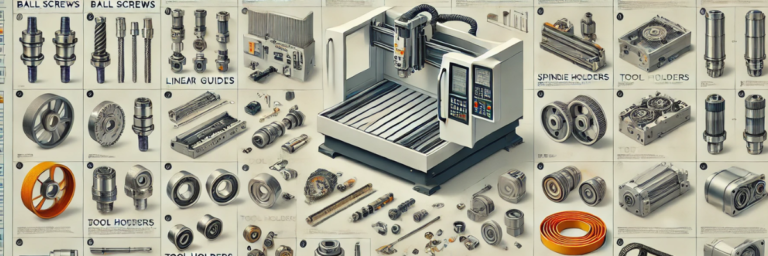
CNC Machine Spare Parts List: Key Components by System
Use this list to identify the mechanical, electrical, pneumatic, control and lubrication spares on a CNC machine. EKA CNC supplies new, reconditioned,…
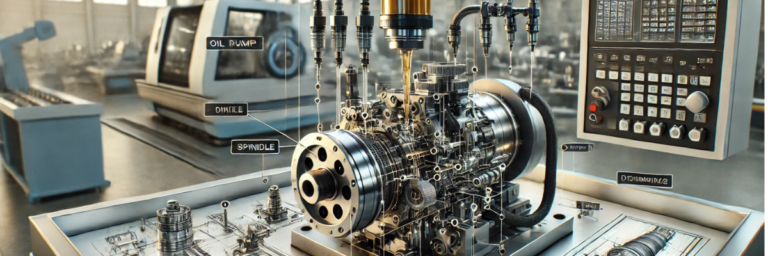
Function of a Lubrication Pump in a CNC Machine
A CNC lubrication pump feeds measured oil or grease to guideways, ball screws and bearings. This guide explains how it works, the warning signs of a f…
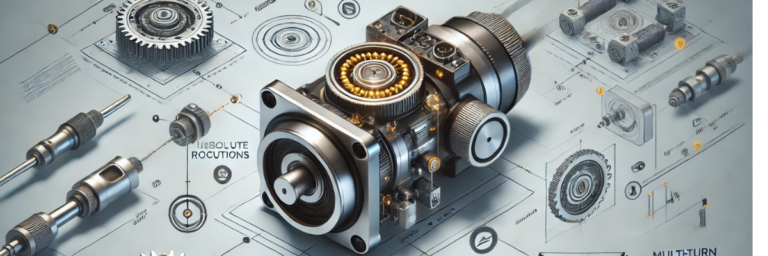
Function of a Multiturn Absolute Encoder and Its Importance
A multiturn absolute encoder reports a unique position across many shaft turns and keeps it through power loss. Learn how it works, how it compares wi…
From requirement to quotation
Have a part number or a machine down?
Send the model, nameplate photo or a short description. We check availability, compatible alternatives and lead time, then reply with a quotation.