
Sensors
Inclinometers, Angle Sensors and Pulse Counters for Automation
CANopen and analogue inclinometers, solid shaft angular sensors, POT10 potentiometer sensors and an impulse counter, ratemeter and period meter for tilt, angle and pulse measurement. Send the model or your application for price and availability.
- CANopen and analogue inclinometers
- Solid shaft angle sensors
- Counters and ratemeters
- Pan-India shipping
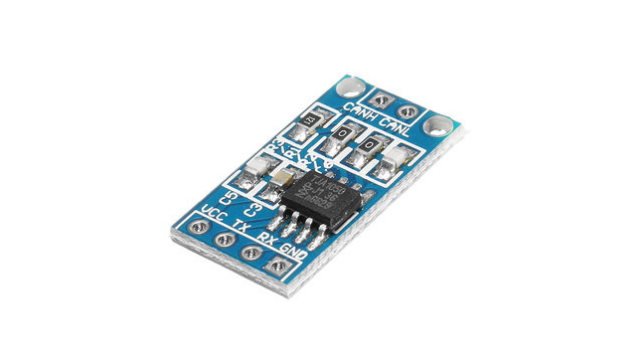
Inclinometers, Angle Sensors and Counters
EKA CNC supplies specialised sensors and indicators from Chennai. The range includes CANopen and analogue inclinometers, solid shaft angular sensors, an impulse counter, ratemeter and period meter, and the POT10 series potentiometer sensor. Typical uses include measuring the tilt of cranes, booms, platforms and solar trackers, measuring shaft angles on valves, dampers and arms, and counting or displaying pulse rates from encoders and proximity sensors.
Your next step
Get price & availability
Share the model or part number and quantity. Attach a nameplate photo or BOM on the quote form if you have one.
In this range
Inclinometers, Angle Sensors and Pulse Counters Available from EKA CNC
Open a product for its specifications, or add several to one RFQ and send them together.

Analog Inclinometer
Robust metal case protects from shocks and vibrations Filling resin protects against thermal shocks, moisture and harsh environments 1D and 2D inclination measurement Protection…

Canopen Inclinometer
High resolution (up to 0.001°) High accuracy (up to ±0.05°) Internal software diagnostic checks 1D and 2D inclination measurement Anti -Vibration programmable filter CANopen…

Impulse Counter Ratemeter and Periodmeter
Reading at 6 digits with 14 mm digit height Standard size of 96 x 48 mm Admits all type of impulse signals and encoders…

Potentiometer Series POT10 Sensor
Specifications Usage/Application Industrial Country of Origin Made in India External Diameter 58 mm Shaft 10 mm Protection Class IP65 according to DIN 40050 Measuring…

Solid Shaft Angular Sensor for Industrial Applications
External diameter 58 mm Shaft 6,35mm Measuring range 10 turns Output resistance 5k or 10k Cable connection (any length of cable available) or industrial…

Solid Shaft Angular Sensor for Industrial Applications
Current, voltage or resistance output Cable connection (any length of cable available) or industrial connector Measuring system using accuracy potenciometer Specifications Country of Origin…
Buyer guide
What Each Sensor Does
| Product | Measures | Typical use |
|---|---|---|
| Inclinometer (CANopen or analogue) | Tilt angle relative to gravity, in one or two axes | Cranes, booms, aerial platforms, levelling tables, solar trackers |
| Solid shaft angular sensor | Rotation angle of a shaft | Valve and damper position, steering, pivot arms |
| POT10 potentiometer sensor | Shaft angle as a variable resistance or voltage | Simple angle feedback to an analogue input |
| Impulse counter, ratemeter, period meter | Counts pulses, shows rate (speed) or time between pulses | Production counting, line speed and RPM display from an encoder or proximity sensor |
Inclinometers need no mechanical connection to a shaft, which makes them easy to fit on moving structures. Angular sensors and potentiometers need a coupling to the rotating part.
Choosing an Inclinometer
- Axes: single-axis for one tilt direction, dual-axis for pitch and roll.
- Measuring range: a narrow range gives finer resolution; a wide range covers large movements.
- Output: analogue (4–20 mA or 0–10 V) for a PLC analogue input, or CANopen for networked mobile machines.
- Response: inclinometers sense gravity, so vibration and acceleration affect the reading. Filtering settings help on moving machines.
- Mounting: fix on a rigid, flat surface and set the zero after installation.
- Protection: outdoor machines need a sealed housing and suitable connector.
Tell us the range, accuracy and output you need, and how the machine moves, and we will suggest a suitable model.
Faster quotations
What to Include in Your Enquiry
Send what you have. If a detail is unknown, say so and we will help identify it from a photo or the machine documentation.
- Model number from the existing sensor label
- Measuring range (angle or count rate)
- Output: analogue, CANopen or potentiometer
- Supply voltage and connector
- Application and mounting details
- Quantity and delivery location
Buyer questions
Frequently Asked Questions
What is an inclinometer used for?
An inclinometer measures tilt relative to gravity. It is used to level platforms and tables, limit boom and crane angles for safety, monitor tilt on mobile machinery and position solar trackers. Because it needs no shaft connection, it can be mounted directly on the moving structure.
Should I choose a CANopen or analogue inclinometer?
Choose analogue (current or voltage) output when the sensor connects to a PLC or indicator analogue input. Choose CANopen when the machine already uses a CANopen network, as on many mobile machines, so the sensor can share the bus with other devices. When replacing, keep the same output.
What is the difference between an angular sensor and a rotary encoder?
Both measure shaft rotation. An angular sensor usually gives an analogue output proportional to angle, which is simple to read on a PLC analogue input. A rotary encoder gives digital pulses or a digital position word with higher resolution. For simple valve or arm position, an angular sensor is often enough. See our rotary encoders for digital options.
What does an impulse counter ratemeter do?
It is a panel indicator that counts pulses from a sensor or encoder and can display the total count, the rate (for example RPM or metres per minute) or the time between pulses. It is used to show line speed, count production and monitor shaft speed without a PLC.
How do I wire a potentiometer sensor to a PLC?
Connect the two ends of the potentiometer track to a stable reference supply and 0 V, and the wiper to the PLC's voltage analogue input. Use a shielded cable and keep it short and away from power cables. Do not use the potentiometer's wiper to carry load current, as this damages the track.
Can you replace a sensor from another maker?
Often yes, if the measuring range, output, supply voltage, connector and mounting can be matched. Send the old sensor's label and photos. If no match is in this range, we will try to source the original through our find a part service.
How do I get a quote?
Send the model number, or your range, output and application, with quantities through our request a quote form, by email to contact@ekacnc.com or by phone. We will reply with the matching model, price and availability.
From requirement to quotation
Have a part number or a machine down?
Send the model, nameplate photo or a short description. We check availability, compatible alternatives and lead time, then reply with a quotation.