
CNC maintenance
Why a CNC Machine Lubrication System Is Important
Why the lubrication system matters to CNC accuracy and machine life, the main types of systems, and the common faults to check. EKA CNC supplies CNC lubrication pumps and system parts.
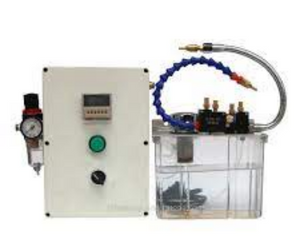
The lubrication system in a CNC (Computer Numerical Control) machine plays a critical role in ensuring the machine's efficiency, accuracy, and longevity. Here are some key reasons for the importance of a CNC machine lubrication system:
Friction Reduction: CNC machines involve the movement of various components, such as linear guides, ball screws, and spindles. These components experience friction during operation. Proper lubrication reduces friction, preventing wear and tear, which can lead to costly repairs and decreased machine accuracy.
Heat Dissipation: The movement of machine components generates heat. An efficient lubrication system helps dissipate this heat by reducing friction, preventing overheating that can damage critical parts and lead to thermal expansion issues.
Precision and Accuracy: CNC machines are known for their high precision and accuracy. Lubrication ensures that components move smoothly and consistently, preventing variations in movement that can result from inadequate lubrication. This is particularly important for precision machining tasks.
Extended Machine Life: Proper lubrication helps protect the machine's components from premature wear and damage. By extending the machine's lifespan, it reduces the need for costly repairs and replacements, saving money in the long run.
Reduced Maintenance: Regular lubrication reduces the need for frequent maintenance and adjustments, which can disrupt production schedules and increase downtime.
Contamination Prevention: Lubricants can act as a barrier, protecting machine components from dust, debris, and contaminants. This helps maintain the cleanliness of the machine, which is vital for its proper functioning.
Noise Reduction: Properly lubricated machine components run more quietly. This can improve the working environment and make it more comfortable for operators.
Consistency in Performance: Lubrication ensures that the machine's performance remains consistent over time. Variations in movement or friction can lead to inconsistent results in machining processes.
Safety: Over time, inadequate lubrication can lead to machine malfunctions, which may pose safety risks to operators and damage the workpiece. Regular lubrication helps maintain safe machine operation.
Efficiency: A well-lubricated CNC machine operates more efficiently, as it can move smoothly and with less resistance. This can lead to increased productivity and reduced energy consumption.
In summary, the lubrication system in a CNC machine is vital for maintaining the machine's performance, accuracy, and longevity. It reduces friction, dissipates heat, and prevents wear and tear, contributing to a more efficient and reliable machining process. Regular maintenance and attention to the lubrication system are essential to keep the CNC machine performing as it should.
Types of CNC Lubrication Systems
Most CNC machines use a centralised system: one pump feeds oil or grease through tubing to every lubrication point. The main types are:
- Manual or single-shot pumps: the operator pulls a lever to send a shot of oil. Found on older and smaller machines.
- Automatic intermittent (cyclic) systems: an electric pump runs for a set time at set intervals, controlled by its own timer or by the CNC. This is the most common type on VMCs and lathes.
- Resistance (restrictor) systems: oil is shared between points by flow restrictors. Simple, but a blocked line can starve one point without warning.
- Positive displacement (volumetric) systems: metering units deliver a fixed volume to each point on every cycle, so distribution is more even.
- Progressive systems: divider blocks feed each point in sequence, and a single monitoring switch can detect a blockage. Common with grease.
When replacing parts, use the same system type. Mixing restrictor and volumetric metering units on one line causes uneven lubrication.
Common Lubrication Faults and What to Check
- Low-level alarm: top up with the oil grade the machine builder specifies. If the alarm stays on, check the float switch.
- Pressure alarm or no pressure: check for a clogged suction filter, air in the line, a leaking joint or a failed pump motor.
- Dry guideways at one point: look for a blocked metering unit, a crushed or cut tube or a loose fitting.
- Too much oil: wrong interval or discharge settings waste oil and contaminate the coolant. Check the pump timer or CNC parameters.
- Milky or dirty oil in the tank: coolant or dirt is getting in. Clean the tank and find the source.
Before ordering a replacement pump, note the pump model, voltage, tank capacity, discharge per cycle and whether it is oil or grease. EKA CNC supplies CNC lubrication systems and pumps.
Frequently Asked Questions
How often should a CNC machine be lubricated?
Automatic systems lubricate at intervals set by the machine builder, typically every few minutes of axis movement or run time. Follow the builder's manual for the interval and oil grade. Check the oil level daily and confirm that the pump actually cycles, because a silent failure can dry out the guideways.
Can I use any oil in my CNC lubrication pump?
No. Use the slideway oil or grease grade specified by the machine builder. Slideway oils contain additives that help the slides move smoothly and stop oil being washed away by coolant. A wrong viscosity can block metering units or fail to protect the guideways.
What causes a lubrication pressure alarm on a CNC machine?
Common causes are a low oil level, a clogged suction filter, air in the pump, a leaking or broken tube, a failed pump motor or a faulty pressure switch. Check the oil level and look for leaks first, then test the pump and switch.
Can EKA CNC supply a replacement lubrication pump?
Yes. EKA CNC supplies CNC lubrication pumps and system parts. Send the pump model, supply voltage, tank capacity, oil or grease type, number of lubrication points and a photo through Request a Quote for price and availability.
What happens if a CNC machine runs without lubrication?
Guideways and ball screws begin to wear quickly, friction and heat increase, and the machine can lose accuracy or show servo overload alarms. Prolonged running without oil can score the guideways, which is far more expensive to repair than fixing the pump.
Your next step
Need this part?
Send the part number or a photo of the nameplate. We reply with availability, compatible options and a quotation.
Related products
Parts and Products Mentioned in This Guide
Keep reading
More CNC and Automation Guides
CNC Machine Spare Parts List: Key Components by System
Use this list to identify the mechanical, electrical, pneumatic, control and lubrication spares on a CNC machine. EKA CNC supplies new, reconditioned,…
Function of a Lubrication Pump in a CNC Machine
A CNC lubrication pump feeds measured oil or grease to guideways, ball screws and bearings. This guide explains how it works, the warning signs of a f…
Function of a Multiturn Absolute Encoder and Its Importance
A multiturn absolute encoder reports a unique position across many shaft turns and keeps it through power loss. Learn how it works, how it compares wi…
From requirement to quotation
Have a part number or a machine down?
Send the model, nameplate photo or a short description. We check availability, compatible alternatives and lead time, then reply with a quotation.